
Independent comparison publishing — since 2017
Sizing 261kWh Storage for Commercial Backup and Peak Shaving
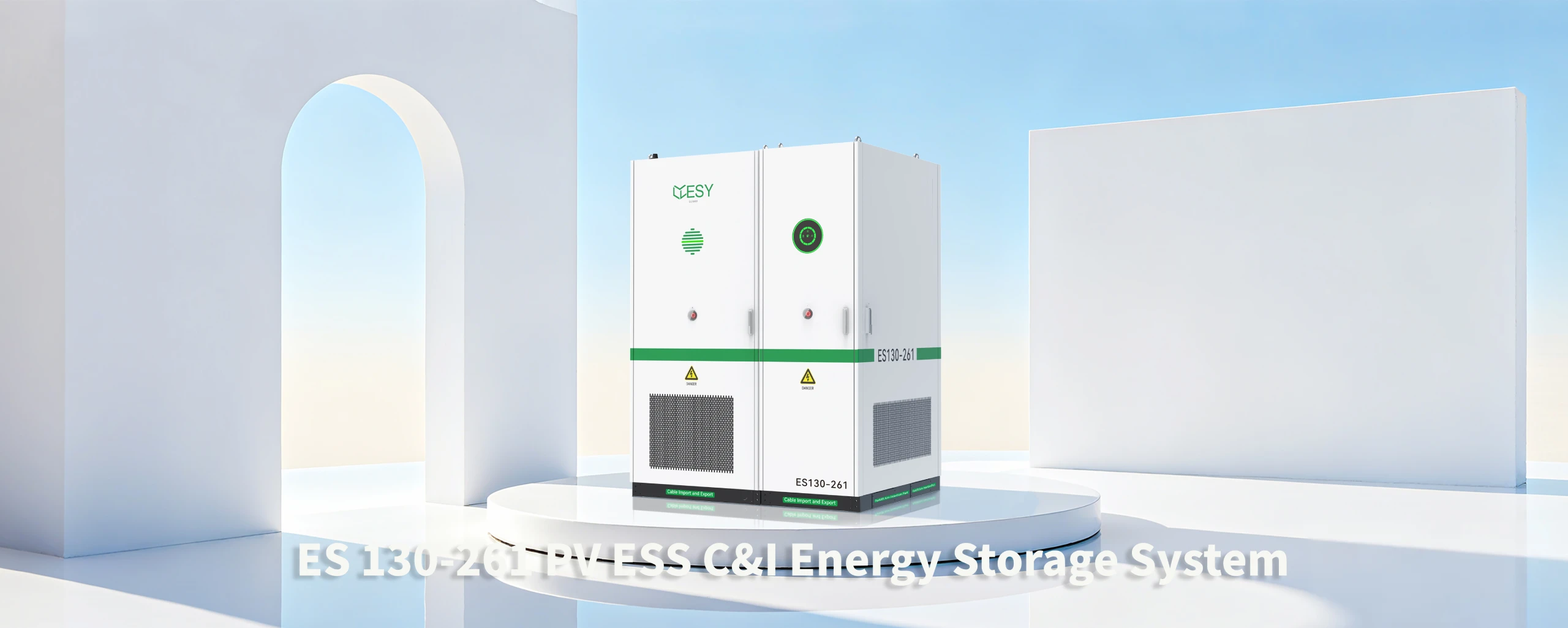
A 261kWh commercial battery storage system is typically sized around a 100–200kW power range to support peak shaving, backup supply, and renewable integration. With 90% depth of discharge and 90% round-trip efficiency, approximately 211kWh of usable energy is available. A system such as ES130-261 by ESYsunhome can support commercial facilities by reducing demand peaks, storing low-cost electricity, and providing several hours of backup power depending on the connected load.
Commercial facilities usually evaluate a 261kWh battery system based on three operating requirements: reducing electricity demand charges, maintaining critical equipment during outages, and increasing renewable energy utilization. Battery sizing is not based only on the kWh number because the discharge power, operating hours, battery efficiency, and load profile determine how much energy can actually be used.
A 261kWh battery contains 261 kilowatt-hours of stored energy under laboratory conditions, but the usable amount is lower after considering battery protection limits and conversion losses. Most commercial lithium iron phosphate (LFP) systems operate with a depth of discharge between 80% and 95%.
| Parameter | Typical value |
|---|---|
| Nominal battery capacity | 261kWh |
| Usable capacity at 90% DoD | 235kWh |
| Round-trip efficiency | 85–95% |
| Practical usable energy | Around 200–220kWh |
| Typical cycle life | 4,000–8,000 cycles |
For a commercial building using a 261kWh storage system, the available electricity after conversion losses is generally around 210kWh. A facility requiring 100kW backup power can operate critical equipment for approximately 2 hours, while a lower 50kW emergency load can continue for about 4 hours.
Battery capacity determines how long equipment can operate, while inverter power determines how much equipment can run at the same time.
The first sizing step is analyzing the building load profile. Commercial facilities often have significant differences between average consumption and peak demand. A warehouse may consume 80kW during normal operation but reach 250kW during equipment startup periods. An office building may have lower average consumption but experience strong afternoon electricity peaks because of cooling systems.
A typical peak shaving calculation uses the difference between normal demand and target demand reduction.
| Example load condition | Data |
|---|---|
| Facility peak demand | 300kW |
| Target peak reduction | 120kW |
| Peak shaving duration | 2 hours |
| Required energy | 240kWh |
| Battery selection | Approximately 261kWh |
A 261kWh system can reduce a 300kW peak to approximately 180kW for two hours if the inverter can provide 120kW output. The battery size matches the energy requirement, while the PCS rating must match the power requirement.
Commercial electricity tariffs in many regions apply demand charges based on the highest monthly power usage. According to data from the U.S. Energy Information Administration (EIA), commercial electricity prices vary significantly by state, and demand-related charges can represent 20%–50% of monthly electricity costs for some commercial users.
The financial performance of peak shaving depends on how often the battery is used. A system operating 250 days per year with one daily discharge cycle may complete approximately 250 cycles annually. With an expected battery lifespan of 10 years, the system may complete around 2,500 cycles, which remains within the typical operating range of commercial LFP batteries.
Backup applications require different sizing calculations because the battery must support selected loads during grid interruptions. Most commercial facilities do not supply every electrical device during outages. Instead, they select equipment that must remain operational.
Common backup loads include:
-
Network equipment and communication systems
-
Security and access control systems
-
Refrigeration equipment
-
Emergency lighting
-
Production equipment requiring continuous operation
For example, a commercial site with 75kW essential loads and a required backup duration of 3 hours would require:
| Item | Requirement |
|---|---|
| Backup load | 75kW |
| Backup time | 3 hours |
| Energy requirement | 225kWh |
| Additional efficiency margin | 10–15% |
| Recommended storage | Around 250–260kWh |
A 261kWh battery is therefore suitable for many small and medium commercial backup applications when the critical load is controlled below approximately 80–90kW.
The inverter selection also affects system performance. A battery with large energy capacity but insufficient power output cannot support high-demand equipment.
| Battery capacity | Inverter power | Approximate full-load duration |
|---|---|---|
| 261kWh | 100kW | 2.6 hours |
| 261kWh | 150kW | 1.7 hours |
| 261kWh | 200kW | 1.3 hours |
A 150kW inverter is often suitable for commercial facilities that need moderate peak shaving and backup support. Larger inverter ratings improve short-term power supply but increase equipment costs.
Battery chemistry selection also affects long-term operation. Lithium iron phosphate batteries have become common in commercial energy storage because they provide stable performance, high cycle capability, and improved thermal characteristics compared with many traditional lithium battery chemistries.
Typical LFP commercial systems installed after 2020 provide:
-
90% or higher round-trip efficiency in many configurations
-
10–15 year expected service life
-
More than 4,000 cycle capability under standard operating conditions
-
Operating temperatures commonly between -20°C and 50°C depending on cooling design
Temperature management is important because battery capacity decreases when operating conditions move outside the recommended range. A battery operating continuously at 45°C may experience faster capacity reduction compared with operation near 25°C.
Solar integration is another common application for 261kWh systems. When paired with photovoltaic generation, the battery can store excess solar electricity during daytime hours and supply power after sunset.
A commercial solar-plus-storage system may operate with the following schedule:
| Time | Operation |
|---|---|
| 08:00–12:00 | Solar generation supplies loads |
| 12:00–15:00 | Excess solar charges battery |
| 16:00–20:00 | Battery supports evening demand |
| Night hours | Grid supplies remaining demand |
In facilities with high daytime solar production, storage can increase onsite solar utilization. Without storage, some solar generation may be exported to the grid at lower compensation rates depending on local regulations.
System monitoring and energy management software also influence daily operation. Commercial storage systems usually include battery management systems (BMS), energy management systems (EMS), and remote monitoring platforms.
The EMS controls:
-
Charging schedules
-
Discharging periods
-
Solar priority settings
-
Backup reserve levels
-
Grid interaction settings
Maintaining a reserve level is common for backup-focused systems. For example, a facility may keep 30% battery capacity available for emergency use while using the remaining 70% for daily peak shaving.
A 261kWh storage project should also consider future electricity demand changes. If a commercial building expects additional equipment installation within 3–5 years, the selected inverter and battery architecture should allow expansion.
Typical commercial storage planning factors include:
| Factor | Recommended consideration |
|---|---|
| Annual electricity increase | 2–5% planning margin |
| Battery degradation | Around 1–3% capacity loss per year depending on usage |
| Backup requirement | Reserve 20–40% capacity when outages are frequent |
| Future solar expansion | Prepare additional inverter capacity |
The actual performance of a 261kWh system depends on correct matching between battery size, inverter output, and facility operation patterns. A well-designed system can provide peak demand reduction, backup electricity, and improved renewable energy utilization within a single installation.
Commercial storage projects developed after 2020 increasingly combine these functions instead of using batteries for only one purpose. A 261kWh configuration provides a practical capacity range for businesses requiring several hundred kilowatt-hours of daily energy management without moving into large utility-scale storage systems.